
CONNECT / 02
Cable assemblies
Turn wiring, length, termination and identification into a consistent assembly brief.
Every conductor has a defined destination.
Cable assembly work turns an electrical relationship into buildable, checkable instructions. FHDT starts with endpoints, wiring, length and mechanical constraints, then defines cable, termination, identification and packing requirements around an agreed sample.
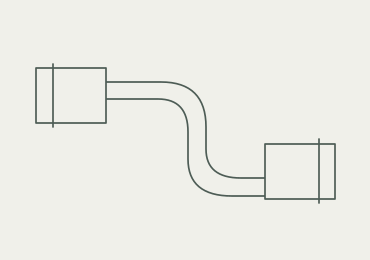
What to clarify in the brief
| Endpoints and wiring | Two-ended or multi-ended connections, pin definitions, shielding and grounding arrangement. |
|---|---|
| Cable and length | Cable specification, length datum, branch points, bend space and jacket requirements. |
| Termination and fit | Terminals, connectors, termination, strain relief and mounting accessories. |
| Checks and identification | Wire and label identification, agreed continuity checks, appearance and kitted delivery. |
Define the deliverables
Cable assembly instructions
Define the wiring diagram, length datum, materials and identification as a common production reference.
Sample and delivery schedule
Agree the sample, checks, packing and quantity handover within the project.
Before you start
How do we start with incomplete drawings?
Start with a physical sample, connection sketch and critical dimensions. List unresolved pins, lengths or terminations, then turn the decisions into a confirmed document.
Your next build starts with a clear brief.
Bring the drawings, sample notes and quantity plan together.